

Introduction: Two Crafts, One Question
If you've ever browsed a crafting forum or watched a few YouTube tutorials, you've almost certainly seen this question pop up: should I learn crochet or knitting? Both crafts produce soft, handmade fabric from yarn. Both can make amigurumi — the Japanese art of crafting stuffed animals and characters from yarn. Both use similar materials. And yet, the two crafts are genuinely different in their technique, tools, learning curve, and the types of projects they suit best.
This guide gives you a thorough, honest comparison so you can make the right choice for your goals, your hands, and the kind of projects you actually want to make. We'll focus heavily on the amigurumi angle since that's one of the most popular reasons people get into fiber crafts today — but we'll also cover scarves, blankets, wearables, and general crafting because the comparison matters there too.
The short version: for amigurumi specifically, crochet wins by a wide margin. But the longer explanation is worth reading, because it explains exactly why — and it reveals a few areas where knitting holds its own.
The Fundamental Difference: One Hook vs. Two Needles
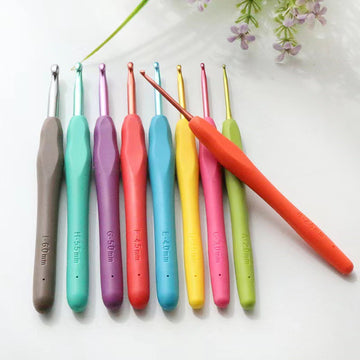
The most visible difference between crochet and knitting is the tools. Knitting uses two needles (or sometimes four to five for working in the round) and keeps multiple live stitches active on both needles at once. Crochet uses a single hook and keeps only one active loop on the hook at any given moment.
This single-active-loop property of crochet has a cascading effect on almost every other aspect of the craft. It means that if you drop your crochet hook mid-project, you can retrieve it and continue without losing any stitches — you only have one to worry about. In knitting, dropping a needle can result in multiple stitches running down the fabric (called a "ladder"), which takes skill to retrieve and repair. For beginners, this difference in error recovery is significant.
Crochet stitches are also generally taller than knitting stitches. Where a knitted stitch barely rises above the row below it, a single crochet stitch has a small but noticeable height. A double crochet stitch is roughly twice as tall. This means crochet projects often grow faster vertically than equivalent knitted projects, which makes crochet rewarding for beginners who want to see visible progress quickly.

Learning Curve: Which Is Easier to Pick Up?
Most craft educators and experienced hobbyists agree that crochet is easier to learn than knitting for the majority of adult beginners. Here's why, in concrete terms:
Hand Positions
Knitting requires coordinating two needles simultaneously — one in each hand — while also managing the yarn tension and the stitches already on the needles. This multi-point coordination feels awkward for many beginners in the first few sessions. Crochet, by contrast, involves one hand holding the hook and one hand tensioning the yarn, with no second needle to manage. Most people find this more intuitive.
Stitch Recognition
In knitting, you need to identify stitches visually to know whether to knit or purl them on the return pass (in flat knitting) or when picking up dropped stitches. This takes time to develop. In crochet, because you're always working into completed stitches and only holding one live loop, the stitch structure is more immediately visible and easier to count.
The Gauge Tension Problem
Both crafts require consistent tension for even fabric, but crochet is generally more forgiving of slight tension inconsistencies than knitting. A crochet stitch that's slightly looser or tighter than its neighbors is often invisible in the finished fabric. In knitting, tension inconsistencies (particularly in stockinette fabric, which is the smooth V-stitch pattern most people picture when they think of "knitting") tend to show up as obvious bumps or holes.
How Long to First Finished Object?
A beginner crocheter can typically produce a recognizable, usable finished object — a simple square dishcloth, a small coin pouch, or a single crochet ball — within their first 2 to 4 hours of practice. A beginner knitter usually needs more practice before their tension is consistent enough for a finished object that looks intentional. This faster time-to-result is one reason crochet has gained so much popularity as a starter craft in recent years.
Amigurumi: Why Crochet Dominates
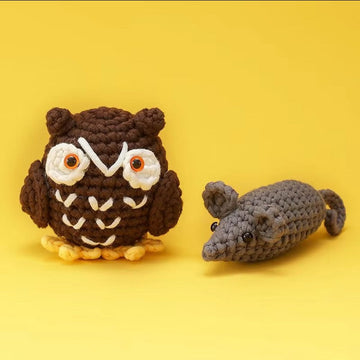
When it comes specifically to amigurumi — the craft that most people searching this topic care most about — crochet is the unambiguous standard. Almost every amigurumi pattern in existence is written for crochet, not knitting. Here's why that dominance makes complete sense technically.
Working in Tight Rounds
Amigurumi pieces are worked in continuous spiraling rounds (called working "in the round") to create seamless three-dimensional shapes. In crochet, working in the round is simple: you use a magic ring or a short chain, join, and spiral outward. The resulting fabric is dense and tightly structured, perfect for holding fiberfill stuffing without gaps.
Knitting can also work in the round, but it requires either double-pointed needles (a set of 4 or 5 short needles), a circular needle, or a technique called magic loop. Each of these methods adds complexity, and for very small diameters — like the tiny circles that start an amigurumi head — double-pointed needles become fiddly and uncomfortable for most beginners.
Stitch Density and Stuffing
Amigurumi absolutely requires tight, dense stitches that hold stuffing inside without any visible gaps. Crochet, especially single crochet worked one or two hook sizes below the yarn label recommendation, produces a fabric with almost no gaps at all. Knitting, because of the way its loops interlock, inherently produces more stretch and more visible structure between stitches. Achieving the right density for amigurumi in knitting typically requires going down several needle sizes, which makes the work even harder to manage on small pieces.
Increases and Decreases in 3D Shaping
Amigurumi shaping relies entirely on precise increases (adding stitches) and decreases (removing stitches) at specific points in each round to create spheres, ovals, cones, and other three-dimensional shapes. In crochet, adding an increase is simply crocheting twice into the same stitch. The "invisible decrease" technique used in amigurumi (working through the front loops of two consecutive stitches) leaves a smooth surface with no visible bump. These shaping techniques are quick to learn and produce reliable results.
In knitting, increases and decreases are more varied (k2tog, ssk, kfb, m1L, m1R, and more), and choosing the wrong one for a given situation can create a visual lean in the wrong direction or an obvious bump. The learning curve for clean shaping in knitting is steeper.
Sewing Parts Together
Most amigurumi figures are made in separate pieces — head, body, limbs, ears, tail — that are assembled by sewing with a tapestry needle. The dense single-crochet fabric makes a firm attachment surface that holds sewn joins securely. Knitted fabric, being inherently stretchier and more open, can stretch at the join points under repeated handling, which makes assembled knitted toys slightly less durable over time.
Pattern Availability
This is not a technical difference, but it's a practical one: there are tens of thousands of crochet amigurumi patterns available, ranging from free beginner tutorials to detailed paid patterns for complex figures. The number of knitted amigurumi patterns is far smaller. If you want to make a specific animal or character you saw online, there is a high probability the pattern exists only in crochet.

Where Knitting Holds Its Own
Crochet dominates amigurumi, but knitting has genuine advantages in other areas that are worth acknowledging honestly.
Drape and Softness for Wearables
Knitted fabric has a natural drape and softness that crochet fabric typically lacks. This makes knitting the preferred choice for garments like sweaters, cardigans, socks, and lightweight shawls. Crochet stitches, being taller and more structured, create a fabric that tends to be slightly stiffer and heavier per square inch than knitted fabric at the same yarn weight. For a cozy fitted sweater, most knitters and crocheters agree that knitting produces a more wearable result.
Yarn Usage
Crochet typically uses about 30% more yarn than knitting for the same finished size. This is because crochet stitches contain more yarn per stitch due to their height and the additional wraps involved in building each stitch. For small amigurumi projects this difference is negligible (you're using small amounts of yarn in any case), but for large projects like blankets, a crocheted blanket will use noticeably more yarn than an equivalent knitted blanket, which affects material cost.
Lace and Fine Detail Work
Intricate lace patterns — the kind with delicate holes, openwork, and cobweb-like textures — are more naturally at home in knitting than crochet. Knitting lace patterns can achieve a delicacy and lightness that is difficult to replicate in crochet. If fine lace shawls or doilies are your goal, knitting has the edge.
Colorwork in Two Dimensions
Techniques like Fair Isle and stranded colorwork — where two or more yarn colors are carried across the back of the fabric to create detailed motifs, geometric patterns, or pixel-art-style images — are knitting specialties. While crochet can produce colorwork (tapestry crochet, intarsia crochet), the results look different and the techniques are harder to control for intricate pattern work. Knitting's colorwork capabilities produce thinner, more drape-friendly fabric that suits wearables far better.

Speed: Which Craft Is Faster?
This question comes up often, and the honest answer is: it depends on the project type and the individual crafter's skill level.
For beginners, crochet is almost always faster because the stitches are quicker to execute once you're past the initial learning phase. A chain plus three yarn-overs (for a double crochet) takes less hand coordination than the multiple needle transfers required in knitting.
For experienced crafters, the gap narrows significantly. Experienced knitters can work at very high speeds, particularly for simple stockinette fabric. Many experienced knitters outpace experienced crocheters on large flat projects like scarves or blankets.
For amigurumi specifically: experienced crocheters work fast on the small round pieces typical of amigurumi, and the fact that crochet amigurumi requires no seaming within individual pieces (the continuous spiral eliminates seams) saves time compared to any knitted equivalent.
Tools and Cost Comparison
Starting either craft doesn't require a large investment, but the tool profiles are different.
Crochet
A basic crochet starter kit includes one or a small set of hooks (typically in sizes 3.5 mm, 4.0 mm, 5.0 mm, and 6.0 mm for most beginner projects), yarn, scissors, and a tapestry needle. For amigurumi, add safety eyes and polyester fiberfill. Total cost for a basic setup: approximately $15 to $30 USD. A complete crochet amigurumi kit bundles all of these together for a specific project, which is often the most economical entry point because you avoid buying materials in larger quantities than you need.
Knitting
A basic knitting starter kit includes straight needles in common sizes (3.5 mm, 4.0 mm, 5.0 mm), yarn, scissors, and a tapestry needle. For more advanced projects you'll need circular needles and possibly double-pointed needle sets, which add cost. Total cost for a basic setup: approximately $20 to $40 USD, potentially more if circular or DPN sets are needed upfront.
Both crafts share the same ongoing cost: yarn. Yarn prices range enormously, from approximately $3 to $6 USD for a basic acrylic skein suitable for amigurumi to $30 or more for luxury fiber yarns. For amigurumi specifically, mid-range acrylic yarn in the $5 to $8 per skein range is perfectly appropriate and widely recommended.
Can You Learn Both at the Same Time?
Technically, yes. Many crafters eventually learn both. However, most instructors and experienced hobbyists recommend starting with one and becoming comfortable with it before adding the second. The hand positions, tension habits, and stitch-reading skills are different enough that learning both simultaneously tends to slow progress in both rather than doubling it.
If your primary goal is amigurumi or crocheted stuffed animals, start with crochet — it's the faster path to your goal. If you later find yourself drawn to sweaters, fine lace, or colorwork patterns, adding knitting skills at that point makes perfect sense.
What Beginners Most Often Get Wrong in Each Craft
Crochet: Tension and Counting
The most common beginner mistake in crochet is inconsistent tension — stitches that start too loose and gradually tighten as the crafter gains confidence, or vice versa. The second most common problem is miscounting stitches in rounds, which causes pieces to grow or shrink unexpectedly. Both are solved by the same practice: slow down, use a stitch marker at the start of each round, and count before moving on. A piece that's only slightly off in stitch count looks noticeably wrong after ten or fifteen rounds, so catching errors early matters.
Knitting: Twisted Stitches and Gauge
Beginners in knitting frequently twist their stitches by inserting the needle through the back of the loop instead of the front. Twisted stitches produce a fabric that looks right at first but has a slightly off texture and may pull in unexpected directions. The second most common problem is gauge — knitting too tightly or too loosely relative to what a pattern requires, which causes finished objects to come out significantly larger or smaller than intended. Gauge swatching (knitting a small test square and measuring it before starting a project) is the standard fix and is a habit worth developing from the beginning.
Which Craft Is Better for Kids?
Both crafts can be taught to children, but the appropriate starting age differs. Most children's craft educators recommend crochet for children aged 7 and up, because the single-hook technique is more manageable for developing fine motor skills than coordinating two needles. Knitting is often introduced around age 9 or 10, though some children with strong fine motor development learn earlier.
For children interested in making stuffed animals — which is frequently the gateway interest — crochet is the more direct path. A child who has mastered the chain stitch and single crochet (achievable in a few hours of patient practice) can start making simple amigurumi shapes right away. The visual feedback of a shape growing in their hands is highly motivating.
Amigurumi Kits: The Fastest Way to Start Making Stuffed Animals
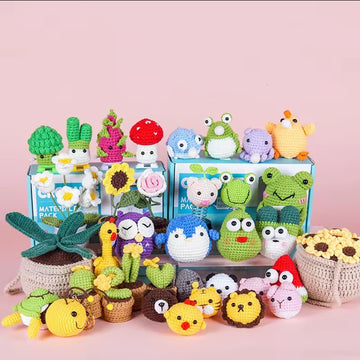
For anyone who wants to make amigurumi without the additional step of sourcing individual materials and finding a suitable beginner pattern, pre-bundled crochet kits are the most practical starting point. A well-designed kit includes pre-measured yarn in all required colors matched to the project, the right hook size for amigurumi-density fabric, safety eyes in the correct size, fiberfill stuffing, a tapestry needle, and a step-by-step pattern. Everything is calibrated together — you don't need to worry about whether your yarn weight is compatible with the pattern or whether your hook is the right size.
Kits also eliminate the guesswork that frustrates many beginners: instead of figuring out how much yarn to buy (tricky when you're new and don't know how quickly you consume yarn), you receive exactly what you need for one project. This format is also excellent for gift-giving — a crochet kit for an interested friend or family member provides a complete introduction to the craft without requiring the recipient to do any shopping.
If you're trying to decide between crochet and knitting specifically to make amigurumi, a beginner-level amigurumi kit makes that decision concrete: you can try the actual craft with a real project immediately, rather than working through abstract tutorials. Check out the crochet amigurumi kits available to find a project that matches your interests and skill level.
Summary: Crochet vs. Knitting at a Glance
For amigurumi and stuffed animals: crochet is the clear choice. It works natively in the round, produces the dense stitch structure needed to hold stuffing, shaping is simpler, patterns are widely available, and the technique is more accessible for beginners.
For garments and drape-heavy projects: knitting has the edge in softness, drape, and yarn efficiency, and its colorwork capabilities are superior for detailed pattern work.
For learning ease: crochet is generally easier and faster to learn for most adult beginners, with a shorter path to a first finished object.
For tool cost: both crafts require a minimal initial investment, with basic starter kits in the $15 to $40 range.
For children starting out: crochet is typically more age-appropriate from around age 7, while knitting is usually introduced closer to 9 or 10.
Frequently Asked Questions: Amigurumi, Crochet, and Knitting
Can you make amigurumi with knitting?
Yes, but it's significantly more difficult. Knitted amigurumi requires working in the round with double-pointed needles or magic loop, achieving an unusually tight gauge, and dealing with stretchier fabric that makes assembly more challenging. The vast majority of amigurumi patterns are written exclusively for crochet, so the pattern selection for knitted amigurumi is much smaller. Most crafters who want to make amigurumi learn crochet rather than adapting knitting techniques to the purpose.
Is crochet faster than knitting?
For beginners, crochet is almost always faster because the technique is easier to execute consistently. For experienced crafters, the speed difference is smaller. Crochet uses taller stitches, so projects often grow faster vertically than comparable knitted projects. However, crochet also uses about 30% more yarn per project for the same dimensions, so the fabric itself takes longer to build up at the raw stitch level than equivalent knitting.
Which craft is better for beginners with no prior crafting experience?
Most instructors recommend crochet for complete beginners. The single-hook technique requires less initial hand coordination than managing two needles, and the single active loop means mistakes are easier to spot and fix without losing progress. A beginner can usually complete a recognizable first project within 2 to 4 hours of practice.
How much yarn do I need for a beginner amigurumi project?
A small amigurumi figure (approximately 10 to 15 cm tall) typically uses 40 to 80 grams of the main color yarn, plus small amounts of 2 to 3 accent colors (often under 10 grams each). A standard 50-gram skein of DK or worsted weight yarn is enough for the main body of most small amigurumi, with leftovers for the next project.
Do I need to know how to knit before learning to crochet?
No. Crochet and knitting are entirely separate skills with different tools and different technique foundations. Knowing how to knit does not make learning crochet easier, and vice versa, except in the general sense that experience handling yarn improves your feel for tension regardless of which craft you've practiced.
What does "working in the round" mean, and why does it matter for amigurumi?
Working in the round means building fabric in a continuous spiral rather than in flat rows that you turn and work back along. For amigurumi, this is essential because it creates seamless, three-dimensional shapes — like a perfect sphere for a head — without any sewing seams running across the surface of the piece. In crochet, working in the round is the default method for amigurumi and requires only a magic ring or a short starting chain. In knitting, working in the round requires additional tools (circular needles or double-pointed needles) and technique.
Is crochet or knitting better for stress relief?
Both crafts are widely cited for their stress-relieving properties, and research into craft therapy suggests that the repetitive, rhythmic motion involved in both reduces anxiety and improves focus. Which one works better for an individual person is personal: some people find knitting's two-needle rhythm more meditative, while others prefer crochet's single-hook simplicity. The best craft for stress relief is the one you enjoy enough to keep doing.
Can I switch between crochet and knitting on the same project?
Generally, no — the techniques and stitch structures are not interchangeable within a single piece of fabric. You can, however, crochet one part of a project and knit another separate piece that you sew together at the end. Some crafters use crochet for edgings or appliqués on knitted garments, which is a common combination technique.
Conclusion: Make the Choice That Serves Your Goals
The crochet vs. knitting question doesn't have a single right answer for everyone — but for anyone whose primary goal is making amigurumi, stuffed animals, or three-dimensional figures, crochet is the practical, logical choice. It was developed partly for exactly this purpose, its technique aligns naturally with the construction of round, stuffed shapes, and the available patterns and learning resources make it easier than ever to get started and see real results quickly.
For crafters drawn to garments, lace, or complex colorwork, knitting remains the stronger craft for those specific applications. Many people who fall in love with crochet through amigurumi eventually add knitting as a complementary skill once they want to expand their repertoire — and that progression is a completely reasonable path.
If you're ready to try crochet amigurumi for the first time, starting with a kit that includes everything you need for one complete project is the most direct route from curiosity to a finished stuffed animal in your hands.


