

Why Seasonal Amigurumi Is the Perfect Year-Round Crochet Project
There is something genuinely special about crafting a handmade decoration that matches the season. Unlike mass-produced holiday ornaments that look identical on every shelf, a crocheted amigurumi piece carries the personality of its maker — the slight variations in tension, the exact shade of yarn chosen, the tiny details that make it unmistakably yours. For beginners especially, seasonal amigurumi offers a natural rhythm: you can build skills project by project as the year unfolds, starting with simple shapes in spring and working up to more complex designs by winter.
Seasonal amigurumi also solves a practical problem that many new crocheters face: what to make next. Instead of scrolling endlessly through pattern libraries, you can let the calendar guide your hook. When October arrives, you make a pumpkin. When December comes, you stitch a snowman. This approach keeps your practice consistent without the overwhelm of too many choices — and it means your home is always decorated with something you made yourself.
At WooHobby, we have seen thousands of beginners discover that seasonal projects are the gateway to lasting crochet habits. A Beginner Crochet Kit that includes a festive design — a Christmas tree, a Halloween ghost, an Easter chick — gives new crafters an immediate sense of purpose. You are not just learning stitches; you are making something for a specific moment, and that motivation is powerful.
Spring Amigurumi: Fresh Starts and Easter Favorites
Easter Bunnies and Chicks
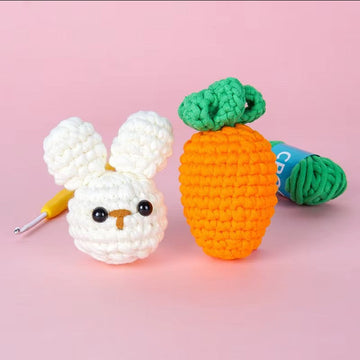
Spring amigurumi is dominated by Easter, and for good reason. Bunnies and chicks are among the most beginner-friendly shapes in all of crochet. A basic amigurumi bunny requires little more than a sphere for the body, a smaller sphere for the head, and two long ovals for ears. The shapes are forgiving — if your bunny's head is slightly lopsided, it looks intentional, like the rabbit is tilting its head curiously.
For a first spring project, aim for a bunny that uses no more than two yarn colors. White or cream for the body, with pink for the inner ears, creates a classic look that never goes out of style. The key technique you will practice here is sewing pieces together — attaching ears, limbs, and sometimes a fluffy pom-pom tail. This assembly skill transfers to virtually every amigurumi project you will ever make.
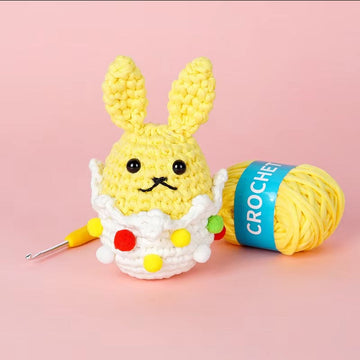
Easter chicks are even simpler. A basic chick is essentially a yellow sphere with a small orange beak and two black eyes. You can complete one in a single evening, which makes them ideal for last-minute holiday decorations or quick gifts. If you want to stretch your skills, try making a cracked eggshell for the chick to sit inside — this introduces color changes, a technique you will use constantly in more advanced amigurumi.
Spring Flowers and Garden Themes
Beyond Easter, spring opens up a whole garden of possibilities. Crocheted flowers — daisies, tulips, sunflowers — are small, fast, and excellent for practicing stitch variety. A sunflower, for example, teaches you to work in rounds with a color change between the brown center and yellow petals. These flowers can become permanent decorations: string them into a garland, attach them to hair clips, or use them to embellish bags and hats.
Spring is also the season when many crocheters start thinking about amigurumi insects. Ladybugs, bees, and butterflies are all achievable for beginners. A bee requires only yellow and black yarn — you change colors every few rows to create stripes — plus two small white wings. The striped body teaches you to carry yarn and switch colors cleanly, a skill that pays off in virtually every multi-color project you tackle later.
Planning Your Spring Project Timeline
One of the most common mistakes beginners make with seasonal crochet is starting too late. If you want Easter decorations ready by the holiday, begin your bunny or chick project at least two to three weeks ahead. This gives you time to work at a relaxed pace, fix mistakes, and still have the piece finished and displayed when the holiday arrives. For spring flowers, there is no hard deadline — you can make them throughout March, April, and May, gradually building a collection.

Summer Amigurumi: Beach, Ocean, and Outdoor Themes
Ocean Creatures
Summer amigurumi naturally leans toward the sea. An octopus is a classic beginner project — the rounded head is a simple sphere, and the eight tentacles are just chains or elongated tubes. At WooHobby, our ocean-themed kits are consistently among the most popular summer sellers. The octopus, in particular, teaches you to work multiple identical pieces (tentacles) and attach them symmetrically, building both patience and precision.
Other excellent summer ocean projects include starfish (flat and worked in rows rather than rounds — a nice variation), turtles (a dome shell plus four small flippers and a head), and jellyfish (a half-sphere with dangling tentacles that can be as simple or elaborate as you like). Each of these introduces different construction techniques. A turtle teaches you to make a flat circle for the shell bottom and a domed piece for the top, then seam them together. A jellyfish is mostly one piece with embellishments, making it one of the fastest projects in the amigurumi repertoire.
Tropical and Beach Themes
Beyond sea creatures, summer invites tropical designs: pineapples, flamingos, palm trees, and beach balls. A crocheted pineapple is surprisingly simple — it is a textured oval shape with a leafy crown on top. The texture comes from a stitch pattern that creates small bumps, mimicking the pineapple's skin. This introduces you to textured stitches, which expand your amigurumi vocabulary considerably.
Flamingos are slightly more advanced because of their long, thin necks and legs, but a simplified beginner version can use pipe cleaners or wire inside the legs for stability. This is your introduction to amigurumi armatures — internal supports that let your creations stand or hold poses. Even if you do not add wire to your first flamingo, understanding the concept prepares you for more ambitious projects later.
Summer Crochet Tips
Crocheting in summer presents a unique challenge: warm hands on warm yarn. If you are working with acrylic yarn — the most common fiber in beginner kits — you may find your hands getting sweaty. Keep a small towel nearby, work in an air-conditioned space if possible, and take breaks more frequently than you would in cooler months. Cotton yarn is an excellent summer alternative because it is more breathable and less insulating than acrylic, though it has less stretch, which affects tension. Consider a Crochet Amigurumi Kit that uses cotton or cotton-blend yarn for your summer projects if you find acrylic uncomfortable in the heat.

Fall Amigurumi: Halloween, Harvest, and Cozy Themes
Halloween Classics
Fall is arguably the most exciting season for amigurumi makers. Halloween alone provides an enormous range of project ideas, from simple to complex. A pumpkin is the quintessential fall amigurumi — it is basically an orange sphere with vertical indentations created by pulling yarn through the center, plus a small brown or green stem. You can make a pumpkin in under an hour once you are comfortable with basic stitches, and they look wonderful arranged in groups of three or five on a mantel or table.
Ghosts are another ultra-beginner-friendly Halloween project. A classic amigurumi ghost is a white cone or dome shape with two black eyes. There is no assembly required — it is one piece from start to finish. This makes it an excellent confidence-building project for someone who has just learned the magic ring and single crochet. You can make a ghost family in an afternoon.
For intermediate beginners ready for a challenge, Halloween offers bats (with wings that require increases and decreases), black cats (similar to a basic cat pattern but in black yarn, which is notoriously harder to see your stitches in), and witches (introducing clothing elements like hats and capes). Each of these teaches specific skills: bat wings teach shaping through increases and decreases; black cats teach you to work with dark yarn; witches introduce accessory-making.
Harvest and Thanksgiving Themes
After Halloween, fall transitions into harvest season. Corn, apples, acorns, mushrooms, and turkeys are all excellent November projects. A crocheted mushroom is wonderfully simple — a white stem and a red cap with small white dots — and the red-and-white color scheme is instantly recognizable. Mushrooms also make charming year-round decor, especially in whimsical or cottage-core aesthetics.
Turkeys for Thanksgiving are more involved but deeply satisfying. The body is a brown pear shape, and the tail fan introduces a new concept: making a flat piece separately and attaching it. The tail fan is essentially a semi-circle worked in rows with color changes for the feathers, then sewn onto the back of the body. This is excellent practice for any project that involves flat pieces combined with three-dimensional ones.
Fall leaves are another wonderful small project. Crocheted leaves in orange, red, and yellow can become garlands, table scatter, or embellishments on other projects. A basic leaf pattern introduces you to working in rows with increases and decreases to create pointed shapes, a skill that transfers to ears, fins, wings, and countless other amigurumi details.
Winter Amigurumi: Christmas, Hanukkah, and New Year
Christmas Characters and Decorations
Winter is the season when amigurumi truly shines. A handmade Christmas decoration carries emotional weight that no store-bought ornament can match — and for beginners, the holiday season provides the strongest motivation to complete projects. There is a deadline, there are people to impress, and there is a tree waiting to be decorated.
Santa Claus is a rite of passage for many amigurumi makers. The body is a red cylinder or pear shape, the beard is white yarn attached in loops or strands, and the hat is a red cone with a white trim and pom-pom. Santa teaches you multiple skills in one project: shaping, color changes, attaching facial features, and adding textured elements (the beard). If a full Santa feels intimidating, start with just a Santa hat — it is a simple cone that you can hang on the tree or use as a gift topper.
Snowmen are even more beginner-friendly. The classic snowman is two or three white spheres stacked and sewn together, with a small orange carrot nose and black eyes. The beauty of a snowman is that imperfections look intentional — a slightly uneven sphere looks like melting snow, which is charming rather than flawed. Add a tiny crocheted scarf (just a chain with a few rows of single crochet) for a pop of color.
Reindeer, elves, Christmas trees, gingerbread people, and candy canes round out the Christmas amigurumi catalog. A Christmas tree is particularly satisfying — it is a green cone (increases and decreases practice) with a brown trunk, and you can decorate it with tiny crocheted ornaments, beads, or embroidery. A gingerbread person is essentially a flat shape worked in rows, which introduces you to the concept of making two-dimensional amigurumi pieces.
Winter Animals and General Cold-Weather Themes
Not all winter amigurumi needs to be holiday-specific. Penguins, polar bears, arctic foxes, and snowy owls all fit the season without being tied to a particular celebration. A penguin is especially popular: the black-and-white body is a classic color-change exercise, and the orange beak and feet add bright contrast. Penguins were one of the first patterns many experienced amigurumi makers learned, and they remain a favorite for good reason — the shape is simple, the color scheme is foolproof, and the result is always adorable.
Mittens, scarves, and winter hats in miniature amigurumi form are also fun. These small accessory projects are fast, use very little yarn, and make excellent gift toppers or ornaments. A tiny crocheted mitten is essentially a tube that splits into two sections — thumb and main body — which teaches you a clever shaping technique used in many larger amigurumi patterns.

Planning Ahead for Next Year
Winter is also the best time to plan your amigurumi calendar for the coming year. As you pack away your holiday decorations in January, make a note of which projects you enjoyed most and which skills you want to develop. If Halloween was your favorite season to crochet for, plan to start your Halloween projects in September next year. If you found yourself scrambling to finish Christmas gifts, start your gift amigurumi in October. The seasonal rhythm becomes more rewarding each year as you refine your timing and build on your skills.
Year-Round Seasonal Amigurumi: A Month-by-Month Project Calendar
To help you stay inspired throughout the year, here is a suggested project calendar that balances skill-building with seasonal relevance:
- January: Snowman or penguin (winter theme, low-pressure after the holiday rush)
- February: Heart or love-themed amigurumi for Valentine's Day — hearts are flat shapes that teach you to work in rows with increases and decreases to create curves
- March: Shamrock or leprechaun for St. Patrick's Day, or start your spring flowers
- April: Easter bunny or chick — aim to finish at least a week before Easter
- May: Garden creatures: bees, ladybugs, butterflies, or more flowers
- June: Ocean creatures: octopus, starfish, turtle, or jellyfish
- July: Tropical or beach themes: flamingo, pineapple, or beach ball
- August: Summer fruit: watermelon slice, lemon, strawberry — great for color practice
- September: Start Halloween prep: pumpkin, ghost, or bat
- October: Halloween projects due by mid-month; start thinking about Thanksgiving
- November: Turkey, autumn leaves, mushrooms, or acorns
- December: Christmas amigurumi: Santa, snowman, reindeer, tree ornaments
This calendar is flexible, not rigid. If you fall in love with ocean creatures in June, keep making them through July and August. The point is to have a default direction so you never sit down with your hook wondering what to make.
Essential Skills You Will Build Through Seasonal Projects
One of the best things about following a seasonal amigurumi approach is that it naturally sequences your skill development. Spring projects like bunnies and chicks focus on basic spheres and simple assembly. Summer ocean creatures introduce you to multiple identical pieces (tentacles, flippers). Fall pumpkins and ghosts teach shaping through increases and decreases. Winter Santas and snowmen bring everything together with color changes, textured details, and more complex assembly.
By the time you have completed a full year of seasonal projects, you will have practiced every fundamental amigurumi technique: the magic ring, single crochet in continuous rounds, increases and decreases, color changes, sewing pieces together, stuffing, adding facial features, and working with a variety of yarn weights and colors. More importantly, you will have a collection of decorations that mark the passage of your year — each piece a reminder of when and where you made it.
Choosing the Right Kit for Each Season
If you are just starting out, a kit removes the biggest barrier to seasonal crochet: gathering materials. Our Crochet Kit Bundles are especially useful for seasonal crafting because they give you multiple projects at once — perhaps a spring bundle with a bunny and chick, or a winter bundle with a snowman and penguin. Bundles also tend to be more economical than buying individual kits, which matters if you plan to make seasonal projects all year long.
When choosing a seasonal kit, look for these features:
- Skill level clearly marked. A pumpkin kit labeled "beginner" should genuinely use only basic stitches. A Santa kit labeled "intermediate" should warn you about color changes and assembly complexity.
- Complete materials. The kit should include all the yarn you need, the right hook size, stuffing, safety eyes (if applicable), a yarn needle, and stitch markers. You should not need to buy anything separately.
- Clear instructions. Look for kits that include both written patterns and video tutorials. Seasonal projects often have tight deadlines, and a video can save you hours of frustration if you get stuck on a particular step.
- Appropriate timing. If a kit takes an estimated 6 to 8 hours to complete and you are buying it two days before Christmas, you may be setting yourself up for stress. Plan ahead and give yourself buffer time.
Frequently Asked Questions About Seasonal Amigurumi
How long does a seasonal amigurumi project take?
A simple project like a pumpkin, ghost, or Easter chick typically takes 1 to 3 hours for a beginner. A medium-complexity project like a bunny, penguin, or snowman takes 4 to 8 hours. More complex projects like a Santa, dragon, or turkey with multiple pieces and color changes can take 10 to 15 hours. These estimates assume you are working at a relaxed pace and may need to undo and redo sections. If you have a hard deadline — like a holiday — add at least 50% to your time estimate to account for mistakes and learning.
What is the easiest seasonal amigurumi for absolute beginners?
The ghost (Halloween) and the snowman (winter) are the two easiest seasonal amigurumi projects. Both are essentially spheres or cone shapes with minimal assembly and no complex color changes. A ghost is one piece — a white dome with two eyes. A snowman is two or three white spheres stacked and sewn together with a small orange nose. Both can be completed in under 2 hours by a first-time crocheter using a kit with clear instructions.
Can I use the same yarn for all seasons?
Yes, but with considerations. Acrylic yarn is the most common fiber in beginner kits and works for all seasons, though it can feel warm and sticky on your hands in summer. Cotton yarn is cooler to work with in warm weather and gives a crisper, more defined stitch appearance — great for flowers and summer projects — but it has less stretch, which affects tension. For winter projects that should feel cozy, a wool or wool-blend yarn adds warmth and softness, but it requires more careful washing. Most beginners use acrylic year-round and adjust their working environment (air conditioning in summer, breaks as needed) rather than switching fibers by season.
How do I store seasonal amigurumi between years?
Store amigurumi in a cool, dry place away from direct sunlight, which can fade yarn colors over time. Acid-free tissue paper or cotton bags are better than plastic bags, which can trap moisture. If your amigurumi has safety eyes or wire armatures, wrap it gently to prevent the hard parts from pressing dents into the stuffing. For dust protection, a sealed plastic bin with silica gel packets works well. Most amigurumi made with acrylic yarn can last for many years with proper storage — some crafters have holiday decorations they made a decade ago that still look fresh.
What if I finish a seasonal project after the holiday has passed?
Finish it anyway. The skills you build are more valuable than the deadline. Store the completed project for next year — you will be ahead of schedule instead of behind. Many experienced crocheters deliberately make seasonal projects off-season, when there is no time pressure, and store them until the appropriate holiday arrives. A pumpkin made in July is just as good as one made in October, and you will enjoy it more because you were not stressed while making it.
Do seasonal amigurumi projects use different stitches than regular amigurumi?
No — seasonal amigurumi uses the same fundamental stitches as any other amigurumi: magic ring, single crochet, increase, decrease (invisible decrease), and slip stitch. The difference is in the shapes, colors, and accessories that make a project read as "Christmas" or "Halloween" rather than generic. A sphere is a sphere whether it becomes a pumpkin, a snowman, or a chick — the seasonal identity comes from the color choices and small added details like stems, noses, or beaks.


